Why You Should Always Do a Second Interview
The Candidate Who Changed Overnight
A few years back, I was hiring for a client's operations manager role. The first interview was textbook perfect. Sharp suit. Great eye contact. Thoughtful answers. This candidate had done their homework on the company, asked smart questions, and left everyone in the room impressed.
We called them back four days later.
Different person walked in.
Not literally, of course. Same face. But the energy was different. The suit was gone, replaced by something more casual than the role called for. The answers were looser, less polished. And when we introduced them to the team supervisor, they spent most of the conversation talking about themselves instead of asking questions.
We didn't extend an offer. And that decision saved my client tens of thousands of dollars in turnover costs, retraining, and morale damage.
That experience taught me something I've now seen play out hundreds of times: personality is found the second time around. The first interview shows you who the candidate wants you to see. The second shows you who they actually are.
Why the Mask Slips
Every candidate who walks into your office for the first time is performing. I don't mean that negatively. They're supposed to put their best foot forward. You'd be worried if they didn't.
But that performance takes energy to maintain. It requires constant self-monitoring. Am I sitting up straight? Am I making enough eye contact? Did I answer that question the way they wanted to hear it?
By the second interview, that energy fades. The candidate already feels like they've passed a test. They got the callback. They figure you liked what you saw the first time, so they relax.
And relaxation is where truth lives.
Some candidates relax and become even more impressive. Their genuine confidence comes through. They ask better questions because they're not worried about impressing you anymore. They engage with your team naturally.
Other candidates relax and the whole thing falls apart. The polished answers turn vague. The professional appearance slides. The enthusiasm they showed on day one is nowhere to be found.
Both of those outcomes are useful information. You just can't get it from a single meeting.
What Changes Between Interview One and Two
In my 25 years of consulting on hiring, I've tracked the specific things that shift between a first and second interview. Here's what to pay attention to.
Appearance and effort. Did they dress at the same level? I'm not talking about wearing the exact same outfit. I'm talking about the level of care. If someone showed up in a pressed suit the first time and jeans the second time, that tells you how they'll show up once they feel comfortable. That's a preview of month three on the job.
Energy and enthusiasm. The first interview generates nervous energy, which often reads as enthusiasm. The second interview shows you their baseline. Are they still excited about the role? Are they asking follow-up questions from the first meeting? Or do they seem like they're just going through the motions?
Consistency of answers. I'll sometimes ask a question in the second interview that's similar to one I asked the first time, but framed differently. Consistent candidates give you the same core answer. Inconsistent candidates contradict themselves. They told you they left their last job for growth opportunities. Now they mention it was because they didn't get along with their manager. Those contradictions matter.
How they treat your team. In a first interview, candidates are focused on you, the decision maker. In a second interview, especially if they meet a different person, you can watch how they interact with people who aren't making the hiring decision. That behavior is the most honest preview of how they'll treat coworkers on day thirty.
The Dating Parallel
I tell business owners this all the time: hiring is dating. You wouldn't marry someone after a first date. You wouldn't sign a lease with someone you've met once. So why would you hand someone the keys to a position in your company after a single conversation?
The second interview is the second date. You already know the surface details. Now you're looking for compatibility, consistency, and character.
And just like in dating, the people who seem "too good to be true" on the first date often are. In my experience, the candidates employers complain about most are the ones who "interviewed wonderfully and then completely changed once they started." A second interview is your best defense against that exact scenario.
A Practical Format for the Second Interview
Your second interview should look and feel different from the first. Here's the structure I recommend.
Keep it shorter. The first interview is typically 15 to 20 minutes. The second can be 15 or even less. You're not rehashing everything. You're observing.
Use a different interviewer. This is important. If you conducted the first interview, have the direct supervisor run the second one. You're looking for two things here. First, does the supervisor like the candidate? They'll be working together daily, so this matters. Second, does the supervisor catch something you missed? Different eyes see different things.
Change the setting. If the first interview was in a conference room, do the second one in the actual workspace. Walk the floor. Introduce them to team members. Put them in the environment they'd actually be working in and watch how they respond.
Ask "what's changed" questions. Open with something like, "Since we last spoke, have you had any additional thoughts about the role?" or "Is there anything you wish you'd mentioned in our first conversation?" These questions give the candidate space to show you what's been on their mind. Prepared candidates will have something thoughtful to say. Unprepared candidates will shrug.
Watch more than you talk. In the first interview, you're asking a lot of questions. In the second, shift the ratio. Let the candidate do most of the talking. Let silences sit for a beat longer than feels comfortable. People fill silence with truth.
What You're Looking For the Second Time
Here's a simple mental checklist for the callback interview.
Consistency. Do their answers match what they told you before? Is their energy level the same? Does their story hold up?
Comfort vs. carelessness. There's a difference between being comfortably confident and being carelessly relaxed. Confidence looks like asking better questions, being more direct, offering ideas. Carelessness looks like showing up late, dressing down, checking their phone.
Team fit. How do they interact with the supervisor? With other employees they meet? Are they warm and curious, or stiff and disengaged?
Genuine interest. Do they still want this job? You can usually tell. Candidates who are truly interested will have done more research since the first interview. They'll reference specific things from the last conversation. They'll lean forward, not back.
The gut check. After the second interview, ask yourself one question: do I feel better about this person, or worse? If you feel better, that's a strong signal. If you feel worse, trust that instinct. It's telling you something the resume can't.
The Objection I Hear Every Time
"David, I don't have time for a second interview. I need this position filled yesterday."
I get it. I really do. An empty desk costs money every day it sits there.
But here's the math. According to SHRM's Human Capital Benchmarking Report, the average cost of a bad hire is roughly $4,700 in direct costs alone. When you factor in lost productivity, team disruption, and rehiring, the real number can climb to $17,000 or higher.
A second interview takes 15 to 30 minutes. The cost of skipping it can last months.
You're not adding time to the process. You're buying insurance against the most expensive mistake you can make.
It's Legitimate to Call Them Back Again
I want to be clear about something. Two interviews is the minimum. Three is common. And there's absolutely nothing wrong with a fourth if you need it.
Every time you bring a candidate back, you're adding another touchpoint where the truth can surface. The mask can't hold forever. That's the entire design of the system.
If a candidate pushes back on coming in again, that itself is information. Someone who genuinely wants the role will make time. Someone who's juggling offers and doesn't really care about yours will start getting impatient.
This is Phase 8 of the 10-phase hiring system, and it's one of the most skipped steps for non-executive hires. Don't skip it. The first interview shows you who the candidate wants to be. The second shows you who they are. That difference is worth every minute of the callback.
The second interview is Phase 8 of the 10-phase hiring system. It's where you re-test the questions that predict performance before you reach the final pause that protects your hire.
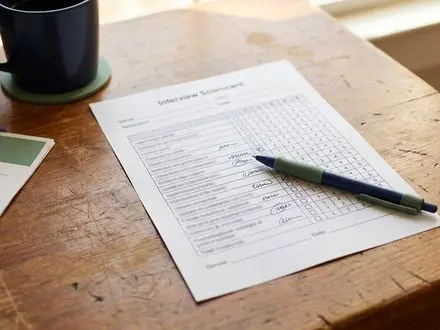
Before your next callback, build a simple interview scorecard so you can compare the first interview to the second on the same criteria instead of going by feel.