The Facility Tour Is Your Best Assessment Tool
Phase 6 of the hiring system has an unsung filter built into it. Most owners treat the facility tour as a courtesy. Run it right and it's an unscripted character test.
In the interview, candidates perform. On the tour, they reveal.
I've watched a polished candidate ace every question I threw at them, then walk past three of my people without making eye contact. The interview said hire. The tour said run. The tour was right.
So watch how a candidate behaves when they think no one's grading them anymore. Do they respect the environment? Respect your time? Show ownership when nobody asked them to: straighten up, pick up a piece of trash, hold a door?
Why the Tour Beats the Interview
The interview is a controlled test. You sit across a table, you ask questions, they give answers they've rehearsed in the car. Structure protects them.
The tour strips the structure away. Now they're in an unfamiliar space, around unrehearsed people, with real work happening at real pace and real noise. There's no script for that. And when the script disappears, character leaks out.
You see how comfortable they are around your people. You see whether they're curious or passive. Most of all, you see how they treat people at every level, not just the person who signs the checks.
This is why the tour belongs after a strong structured interview and ideally as part of a second look, not before. By Phase 6 you've already decided they can do the job. Now you're deciding who they are.
What to Watch For
Three things tell you almost everything.
How they treat your team. The best candidates greet everyone eye to eye, the forklift driver and the front-desk person same as the manager. The dangerous ones turn the charm on for you and treat everyone else like furniture. Someone who's warm to the boss and cold to the staff is showing you exactly how they'll behave once they're hired and the boss isn't looking.
Their questions. Curious, engaged people ask about the work. "How long does a job like that take?" "What's the busiest part of your day?" The passive ones say nothing, or they ask things they could have Googled in ten seconds. Silence on the tour is information.
Their physical reactions. A nose wrinkle at the shop floor. Arms crossed in an "I already know better" posture. Visibly overwhelmed by the pace. Those are warnings. The good signs are just as readable: leaning in to look closer, smiling, turning their body toward your people instead of away.
These are the same instincts you're using when you catch interview red flags. The tour just gives you a live, unscripted place to use them.
How to Run an Effective Tour
A tour only works as an assessment if you run it on purpose. Here's how I do it.
Decide who walks them through first. You start the tour. The candidate expects that, and the first few minutes set them at ease. But the real test comes when you hand them off. Partway through, peel away. "I've got a quick call. Sarah's going to finish showing you around." Now they're alone with a staff member and no boss to perform for. How they behave in that stretch tells you more than the whole interview did.
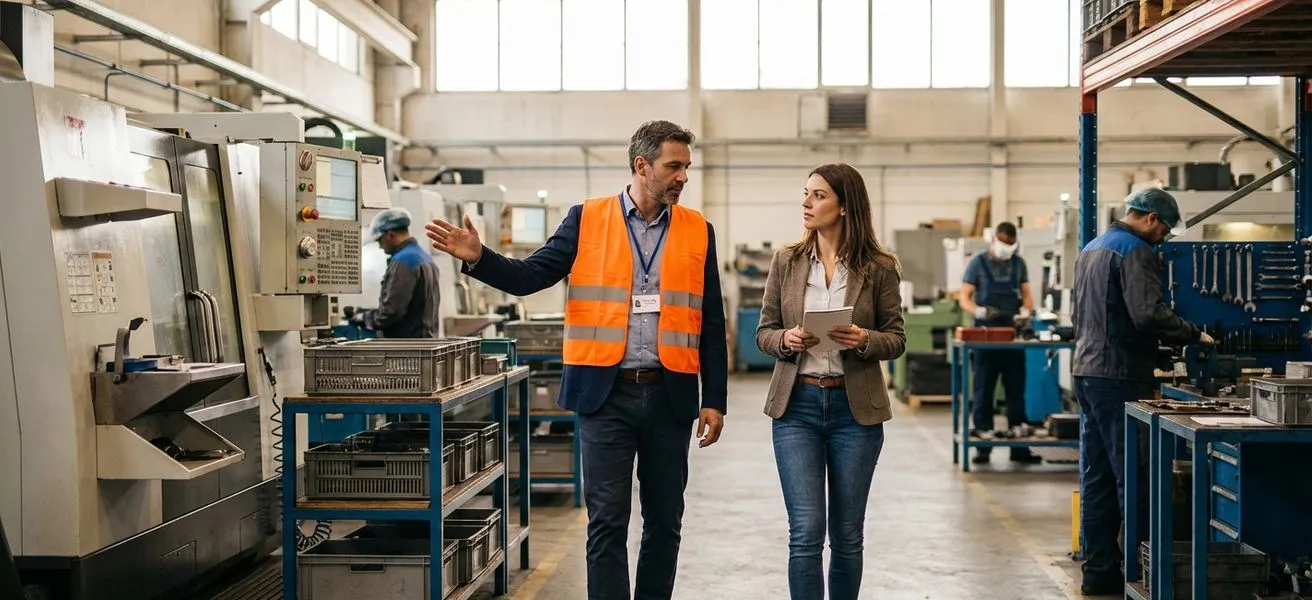
Plan the route so it crosses real work. Don't walk them down empty hallways. Route the tour through the places where your people are actually doing the job. The floor, the line, the bullpen, wherever the work and the noise live. You want them standing in the middle of a normal Tuesday, not touring a museum after hours.
Talk less than you think you should. Most owners narrate the entire tour. Don't. Point things out, then go quiet and let the silence sit. Silence is where character shows up. A good candidate fills it with questions and curiosity. A weak one fills it with nothing, or with talk about themselves. Ask open questions and then stop talking: "What do you notice?" "What would your first week here look like?" Then wait.
Introduce them to staff by name and let it breathe. Don't rush the handshakes. "This is Marcus, he runs our second shift." Then pause long enough that the candidate has to actually engage, not just nod and keep moving. Watch whether they ask Marcus a question or treat him like a checkpoint to clear. The candidate who genuinely connects with your people on a five-minute tour is the one who'll fit once they're on the team.
Watch what they do, not just what they say. Does a candidate step around a spill or mention it? Hold a door or let it shut behind them? Pick up something that fell or step over it? Nobody coaches you for this, which is exactly why it's worth watching.
What not to do. Don't oversell. The tour isn't a sales pitch, and the moment you start talking the place up, you've handed them the script back. Don't fill every silence. Don't telegraph what you're looking for. And don't skip the floor because it's loud or messy. The mess is the test.
Ask your staff afterward. This is the step almost everyone misses. The moment the candidate leaves, go find the people they spent time with. Ask three questions: Did they talk to you or just at you? Would you want to work next to them? Anything feel off? Your team will pick up things you missed, because the candidate wasn't performing for them. Some of my best hiring saves came from a staff member saying, "He was nice to you, but he was rude to me in the parking lot."
The Thread
The facility tour is Phase 6 of the ten-phase hiring system, and it does a specific job. The structured interview tells you whether someone can do the work. The tour tells you who they'll be once they're inside your walls and the spotlight's off.
That's the through-line of the whole system. Every phase is built to make the candidate reveal a little more of the truth, so by the end you're deciding based on what you actually saw instead of guessing.
Skip the tour, or run it as a polite walk-and-wave, and you throw away one of the clearest looks at someone's character you'll ever get. Run it on purpose and you'll catch the things an interview was never built to catch.
I dug into why character beats credentials in The Naked Interview. The facility tour is where that idea stops being theory and starts being something you can watch happen.
Want a faster way to spot the warnings before you ever schedule a tour? Run a candidate through the red flags checklist and see what surfaces.